The grandma smell every woman over 60 quietly fears has a real cause, and it isn't hygiene
Health
We all remember that our grandparents had a unique smell, that “old people” smell. You can't smell it on yourself, and no one will ever tell you. But there is a reason it comes back no matter how much you wash, and a simple answer women in Japan use today.

 Written by Carol Whitaker · Reader story · Advertorial · October 2, 2026
I was folding laundry when I caught myself doing it again.
I held my pillowcase up to my face and breathed in.
I do this more than I'd like to admit. My name is Carol, I'm 64, and for the past year or so I've been checking. Not because my pillowcase smells bad. Because I can't tell. And that's what scares me.
My mother used to do the same thing. I'd see her press a sweater to her nose in the closet, quick, like she didn't want anyone to notice. I never understood why.
Now I do.
We all know the smell. Every one of us. It's in our grandmother's house, in the cardigan she always wore, in the hug that lasted a little too long. It's warm and musty and a little sweet, like a towel that sat too long.
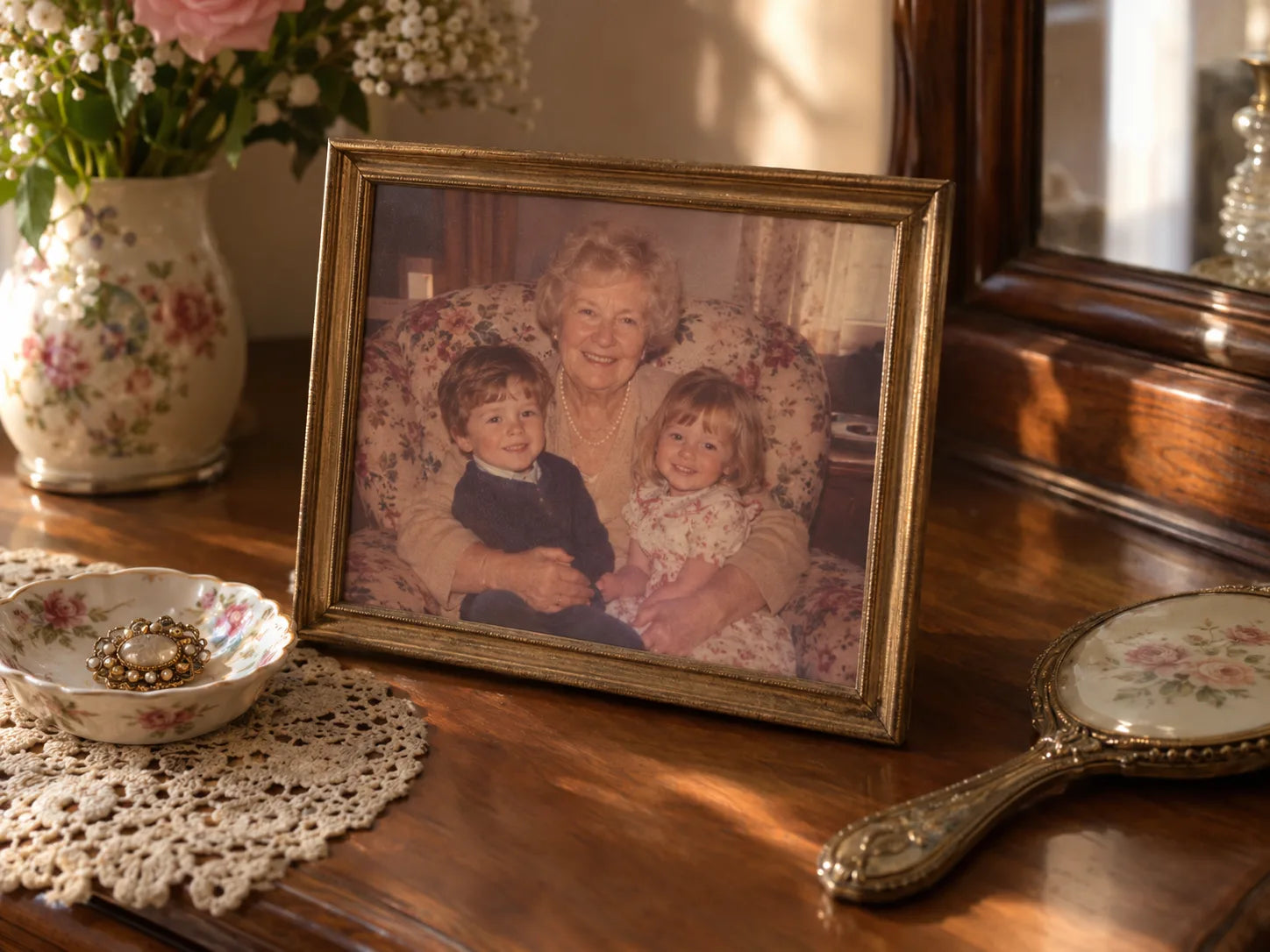
I loved my grandmother's smell. It meant comfort. It meant her.
But I also remember the first time I smelled it somewhere else. A friend's mother. An aunt. A hallway in a care facility. And I remember the quiet thought I pushed away.
Do I smell like that now?
I shower every day. I use nice soap. I wear clean clothes. I'm careful.
And still, I worry.
Because I've known women who were spotless. Women who bathed twice a day. Women who would never leave the house without looking perfect. And they had that smell too. I could smell it on them. They couldn't smell it on themselves.
Nobody ever told them. And nobody would tell me.
That's the part that keeps me up at night. Not the smell itself. The not knowing.
Here is what I found out, and I wish someone had told me sooner.
The grandma smell is real. It has a real cause. And it has nothing to do with being clean.
In Japan, they know it so well that they have a word for it. Kareishu. It means the smell of aging. Back in 2001, Japanese researchers found a compound called 2-nonenal on the skin of older people. It tends to show up after age 40, builds as the years pass, and is linked to what many people call the smell of aging.

I had never heard of it. None of my friends had either.
But once I knew, everything made sense.
The smell doesn't come from sweat. It doesn't come from dirt. It doesn't come from your house or your laundry. It comes from your skin itself. That's why the cleanest women you know still get it. That's why more showers don't help. That's why scrubbing harder doesn't help.
You're cleaning the wrong thing.
And here's the part that made me sit down on the edge of my bed.
You cannot smell it on yourself.
Your nose tunes out your own smell within minutes. You walk into your house and the scent fades. You wear a sweater all day and stop noticing it. Your nose is built to ignore what's always there.
So the woman who has the grandma smell is always the last to know. And the people who love her are too kind to say a word.
I asked my sister once. I said, "Please, just tell me. Do I have that smell?"
She looked at me and said, "Of course not."
But I could tell she was being nice. And that's the problem. The people you trust most are the ones who will never tell you.
So I did what I always do. I tried everything.
I bought stronger soap. I switched to a body wash with a fancy scent. I tried deodorant everywhere. I washed my sheets on the longest cycle. I used hot water. I used bleach. I sprayed perfume on my cardigans.
None of it worked. The smell came back. Every time.
And it's not just on me. It settles into everything I touch. My pillowcase. My favorite chair. My car. The collar of my coat. That's what makes it the smell of a house, not just a person. It gets into the fabric and stays.
I thought something was wrong with me. I thought I wasn't doing enough. I thought I wasn't clean enough.
It wasn't my fault. I was just using the wrong thing.
Every soap I had was made for sweat and dirt. Every deodorant was made for body odor. Every perfume was made to cover up. None of them were made for the grandma smell, because the grandma smell isn't sweat or dirt. It's something else entirely.
Then a friend told me about something women in Japan do today.
They wash with persimmons.
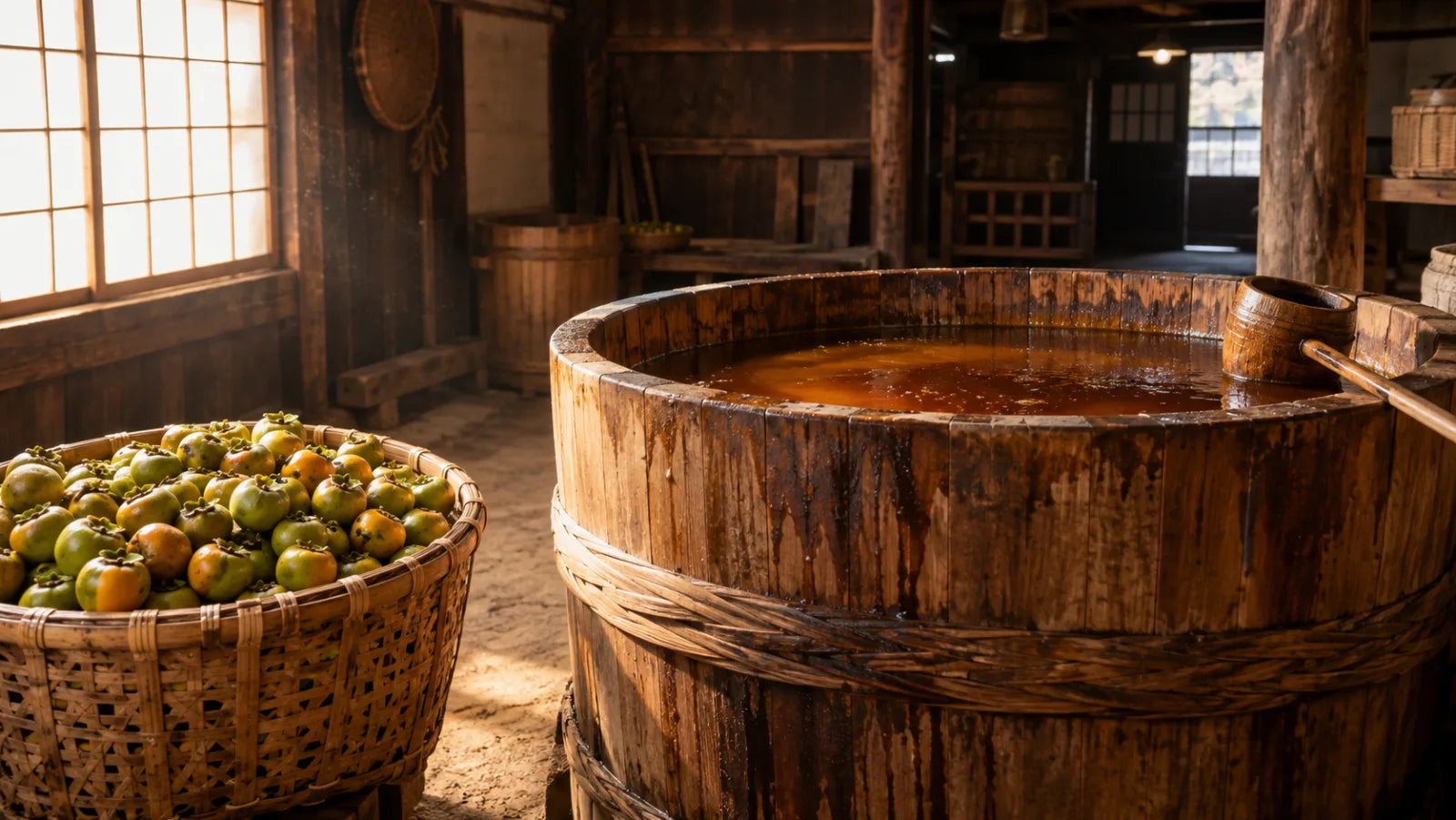
Not the ripe, sweet ones you eat. The green, unripe ones. The ones that make your mouth pucker when you bite into them. That pucker is tannin, and when you ferment it, it becomes something called kakishibu. Kakishibu has been made in Japan for centuries. Today, persimmon tannin soaps are one of the best known answers to kareishu in Japan.
It made sense to me. If the smell comes from the skin, you need something that works on the skin. Not a cover up. Not a perfume. Something that helps wash away what your skin is making.
That's when I found SAWUMI.
SAWUMI is a bar of soap with real fermented Japanese persimmon tannin pressed right into it. Not a persimmon scent. Not a fruit smell. Not a dye that makes it look pretty. The real thing.

Here's what I do. Once a day, in the shower, I lather the bar on my neck, behind my ears, on my chest and my back. About 30 seconds. Then I rinse. That's it. No new steps. No sprays. No extra routine. Just a different bar of soap in the shower I already take.
The scent is soft and natural. It comes from the persimmon extract and some botanical oils. It doesn't smell like perfume. It doesn't smell like a fruit basket. And it rinses away completely. After my shower, I smell like nothing. Just clean.
My skin is dry and thin in places, the way it gets at this age. This bar is gentle on mature skin. It doesn't leave my skin feeling tight. It's sulphate free. It just feels like a good, honest bar of soap.
The first thing I noticed was my pillowcase.
About five days in, I did my check. I held it to my face. And for the first time in a long time, I didn't get that tight feeling in my chest. It just smelled like clean fabric.
I checked my collar. Same thing. The cardigan I wear around the house. Same thing.
I'm not going to tell you it works overnight. I'm not going to tell you it's more than what it is, because it's not. It's a bar of soap with something in it that ordinary soap doesn't have. That's the whole point.
I'm not going to tell you it works for everyone, because I don't know that. I can't point you to a study on this exact bar. I can only tell you what I noticed on my own pillowcase, my own collars, my own cardigan. The tightness in my chest went away.
That's all I have. My own check, and the fact that the company lets anyone try it for 30 days. If it didn't work for me, I'd send one email and get my money back. That's the honest truth.
Now let me tell you what I was worried about, because maybe you're worried about the same things.
I thought, soap is soap. A bar is a bar. What makes this one different? The answer is the tannin. Regular soap doesn't have it. That's like using shampoo to condition your hair. It's the wrong tool. SAWUMI has the thing that was made for this.
I thought, is this a gimmick? Some fruit trick? No. It's not a fruit scent. There are soaps that smell like persimmon but have almost no real tannin in them. SAWUMI presses real fermented persimmon tannin into the bar. That's the difference.
I thought, another routine at my age? No. I already shower. I just use a different bar. Thirty seconds. That's less time than it takes me to pick out what to wear.
I thought, what if it doesn't work for me? Here's what sold me. SAWUMI gives you 30 days. Thirty days. If you don't notice a difference, or your pillowcase doesn't notice a difference, you don't have to send anything back. One email to help@sawumi.com within 30 days and you get every penny back. That's how sure they are.
Here's what I want you to think about.
My grandmother had that smell, and I loved her for it. It meant her. But times have changed. We know more now. We know what causes it. We know it's not our fault. And we know there's something that helps.
I wish my mother had known. I wish my grandmother had known. They would have used it in a heartbeat.

What I want is simple. I want to stop wondering. I want to stop checking my pillowcase and feeling that tightness in my chest. I want to know.
That's all any of us want. Just to know.
One bar. Thirty seconds in the shower. Check your pillowcase in a week. If it doesn't help, get your money back.
Try it and do your own pillowcase check. That's the only way you'll know for sure.
This is a dramatized story based on what SAWUMI customers have told the company; names and photos are illustrative. Individual results vary. SAWUMI is a cosmetic soap and is not intended to diagnose, treat, cure or prevent any disease.
